Thoughts Along The Meadow

All is calm as the soft, restrained light, frames the water meadow in the twilight hour.
Sudbury Water Meadow: Seasons and Light
Situated alongside the historic town of Sudbury, the meadow is a landscape shaped by time, and water. For centuries it has provided fertile grazing for livestock while acting as a natural buffer against seasonal flooding, absorbing the ebb and flow of the River Stour as it gently winds across the valley.
Sudbury’s relationship with the river is as old as the town itself. Built on a thriving textile industry, it’s prosperity once depended heavily on the Stour, as a source of power and a means of trade. The low lying meadows which frame the river offered protection as well as opportunity, quietly underpinning the town’s growth.
As industry waned and land use evolved, the role of the meadow has slowly changed. What remains today is a place of quiet persistence, providing a refuge for wildlife woven seamlessly into the fabric of this busy market town.
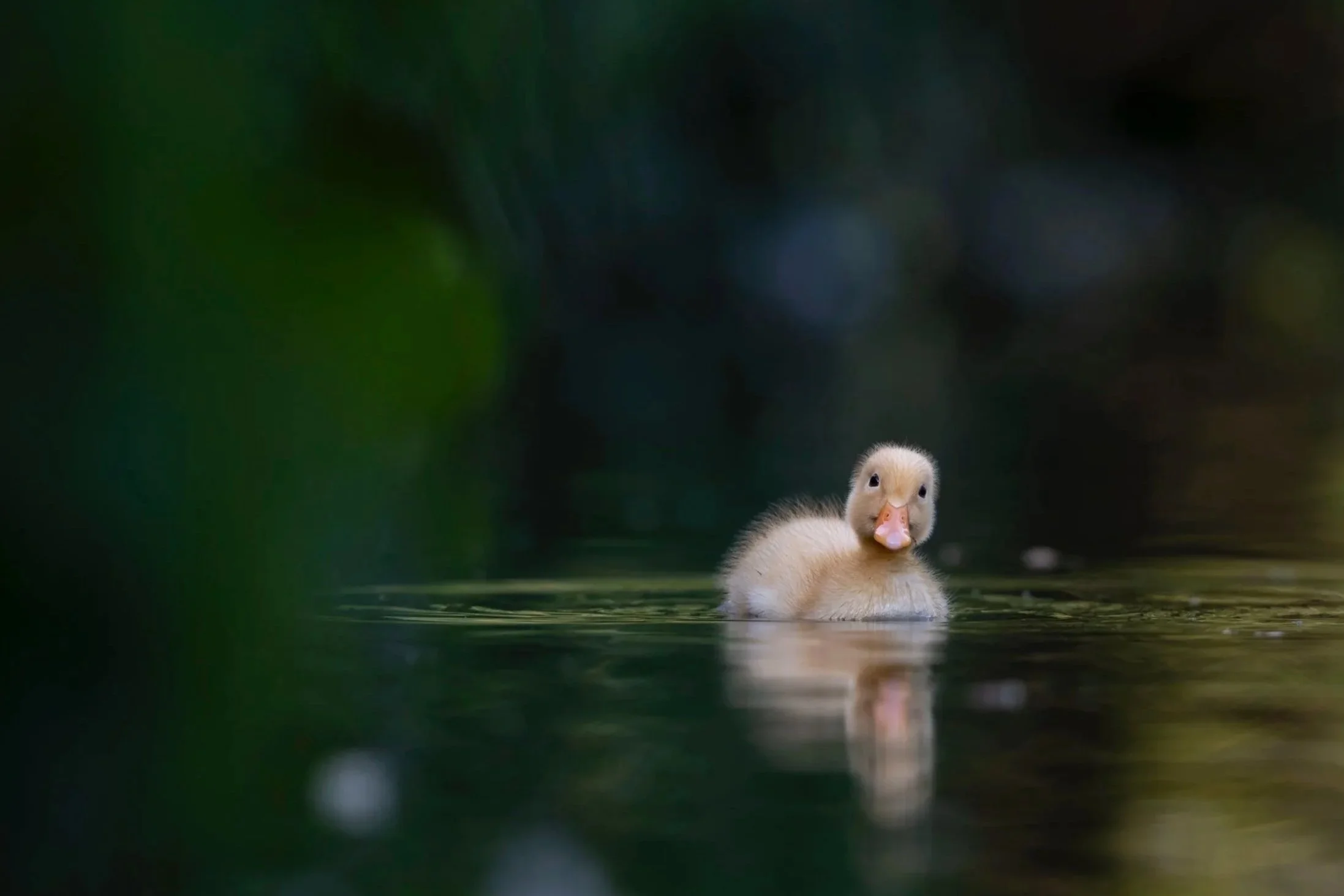
With the onset of Spring the Meadow is awash with activity.
A Place of Ancient Rhythm
This gentle, undulating landscape has long inspired artists and photographers drawn to its understated beauty. Thomas Gainsborough grew up in Sudbury, immersed in the Suffolk countryside from an early age. Though he left behind few written records of specific locations, his connection to nature was profound. “Nature is the object of all my thoughts,” he once wrote.
That sentiment resonates today, as you walk the meadow at first light and the mist lingers along the meandering river. How this landscape shaped Gainsborough’s thoughts all those years ago we can only imagine, but he famously expressed a desire to leave formal portraiture behind, dreaming instead of wandering through “some sweet village” to paint landscapes in quietness and ease.
Standing here today, it is easy to understand why.
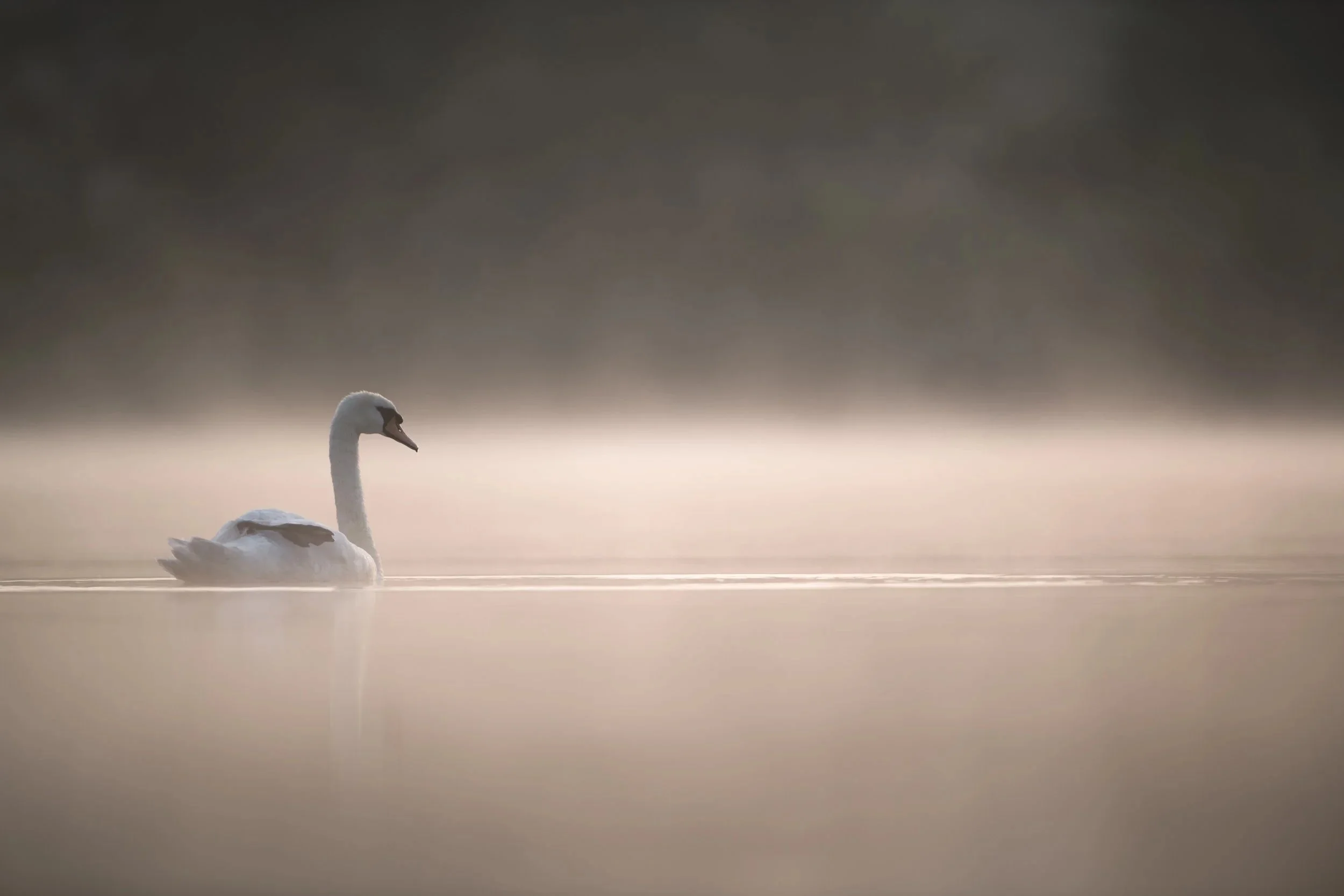
The lingering mist clings to the waters’ surface, framing this mute swan along the meadow.
The Quiet Presence of the Mute Swan
If one species defines the meadow it is the Mute Swan, and I have photographed these incredible creatures for many years along this stretch of the Stour. With well established territories, passed from one generation to the next, they always bring a reassuring sense of continuity to this landscape.
Mute swans are sedentary birds, but seasonal shifts reveal subtle, yet telling changes in their behaviour. In the cold winter months, they loosely congregate along the river, their pace is slow to conserve energy, and for the most part their activity is largely subdued.
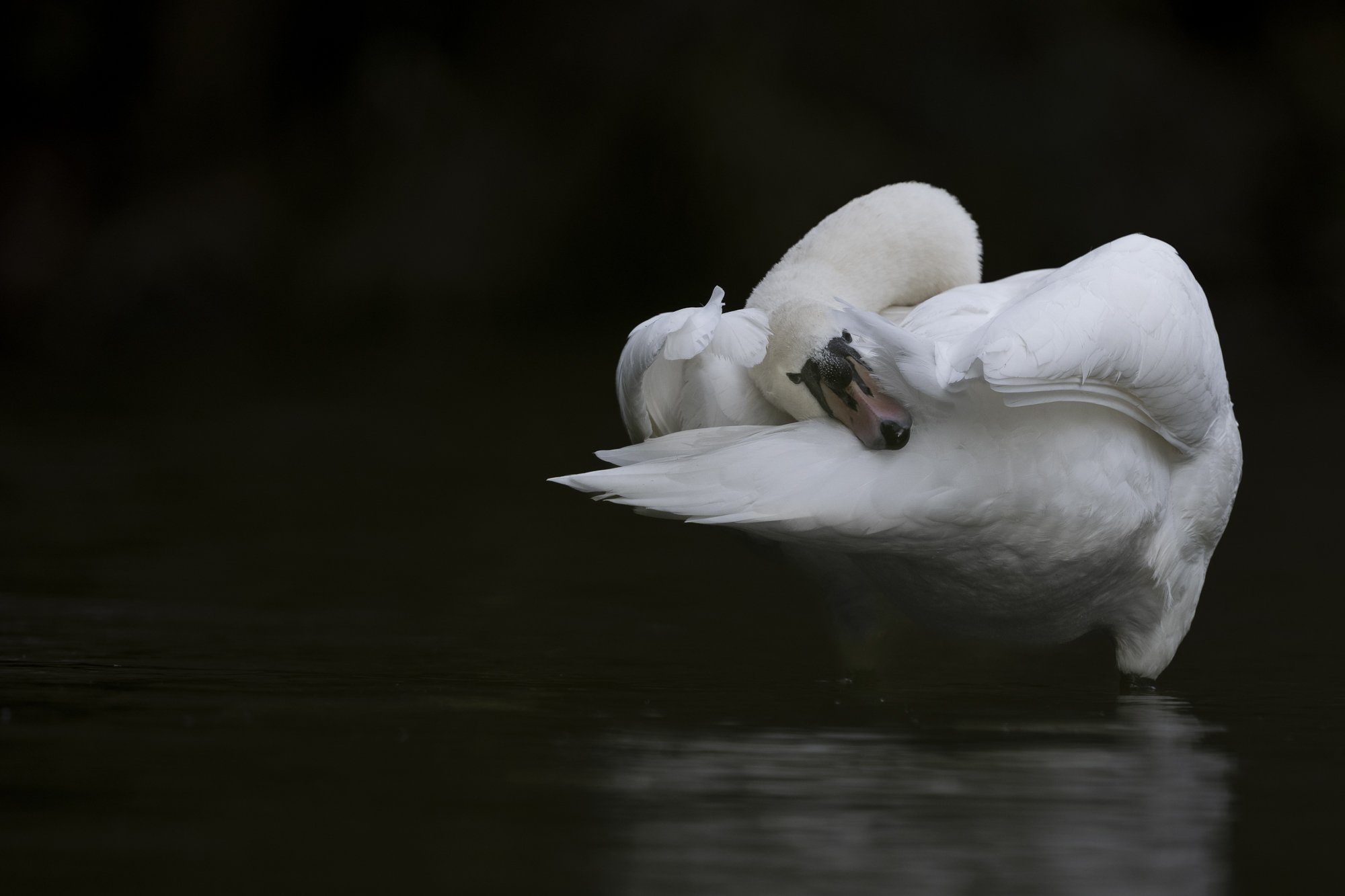
Intimate gestures and subtle movements tell their own compelling story.
An Elaborate Courtship
With the onset of March a heightened sense of activity prevails. Swans engage in an elaborate courtship at this time of year, mirroring one another, arching necks and bobbing heads in seamless unison. It is a moment of symmetry which reinforces a partnership often carried for life.
During the breeding season behaviour is more assertive, with dramatic territorial displays played out across the water. Raised wings, hissing and slow, deliberate movements are commonplace as they establish their territory, returning each year to favoured nesting areas.

Diffused light, just before sunrise frames this mute swan along the meadow.
A Time of Renewal
By early June, the river is alive with movement as cygnets are shepherded along the margins under the watchful gaze of parents. Each adult has a role to play, guiding their young across the water, teaching them where to feed and how to navigate their immediate environment. Fiercely protective and highly territorial, they rigorously patrol the confines of this newly discovered world with a heightened sense of vigilance.
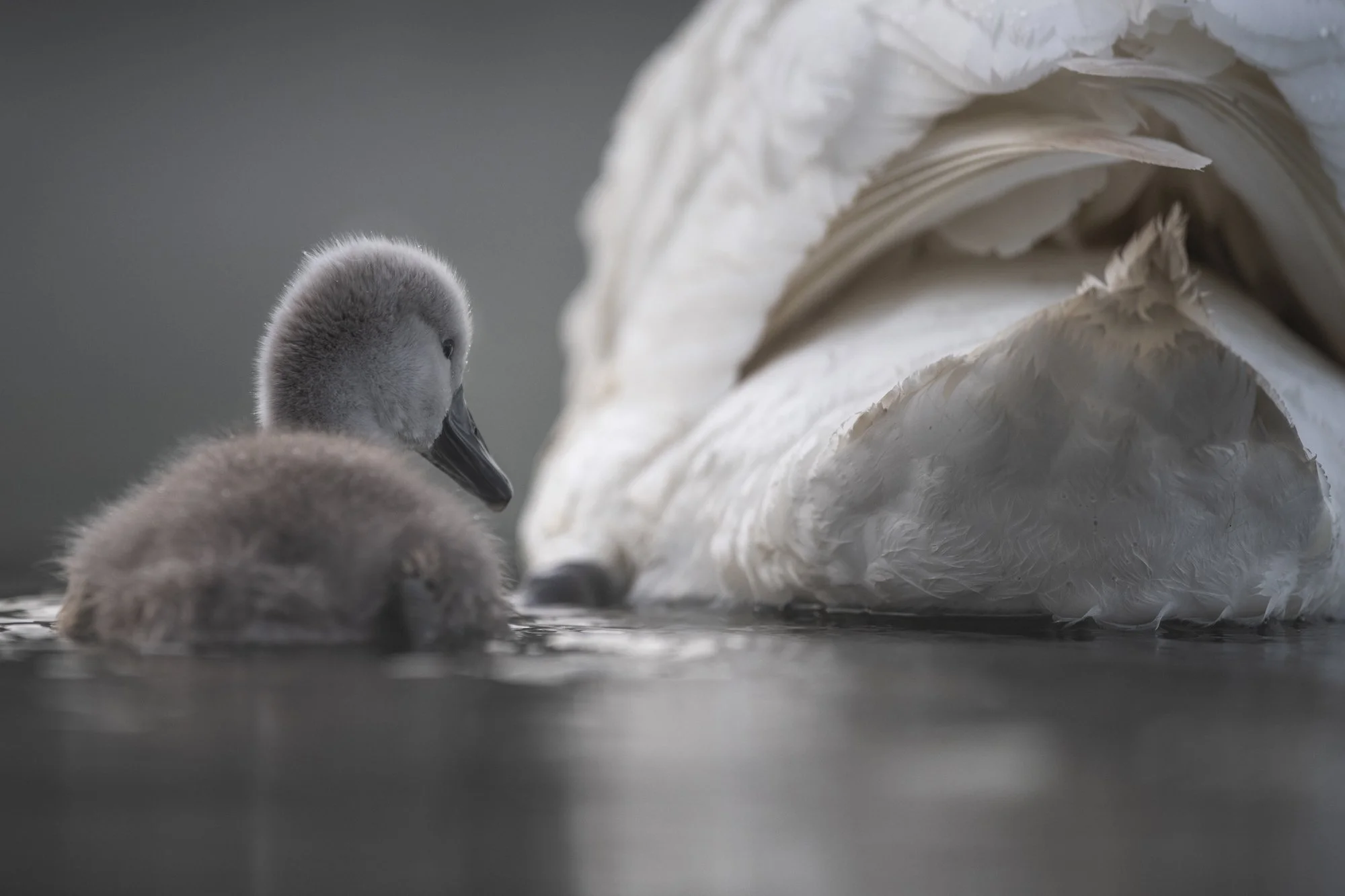
A cygnet remains close, under the watchful gaze of parents.
A Place Of Endless Variation
As autumn approaches, family groups tend to loosen, the young gain a certain degree of independence, and so the cycle turns once more. For the photographer, the meadow offers endless variation in a place of constant renewal where no two seasons, weeks or days, are ever quite the same.

Winter takes hold along the riverbank.
A Series of Intimate Gestures
I have always found photographing swans is less about spectacle, and more about capturing those small yet intimate moments which reveal something of their innate character. If you watch closely you tend to appreciate these subtle mannerisms and behaviours, as they interact with one another along the riverbank.
Patience and careful observation are an essential ingredient in my wildlife photography. Nature follows its own distinct rhythm, and cannot be rushed or simply coerced to perform for the camera. You have to invest the time. Find one of the many ‘swims’ along the river bank where the swans frequent, wait quietly and the scene will have a tendency to naturally unfold.

Moments tend to be revealed rather than announced for those prepared to linger.
Seeing The World at Ground Level
Most of my favourite images are the result of many hours, just watching and listening along the river bank. It is not a precise science, but knowing what your subject is likely to do in respect of poise, call, shake or wing beat can often reveal moments with a story to tell.
I typically work from a low perspective, close to ground or water level. Lowering yourself to your subject’s eye line can transform the way an image feels, creating a sense of intimacy and connection. I have always found your composition feels less about place, and more about presence, light, and mood when adopting this technique. From this position, reflections soften, backgrounds simplify, and the viewer is drawn into the scene rather than simply observing from above.
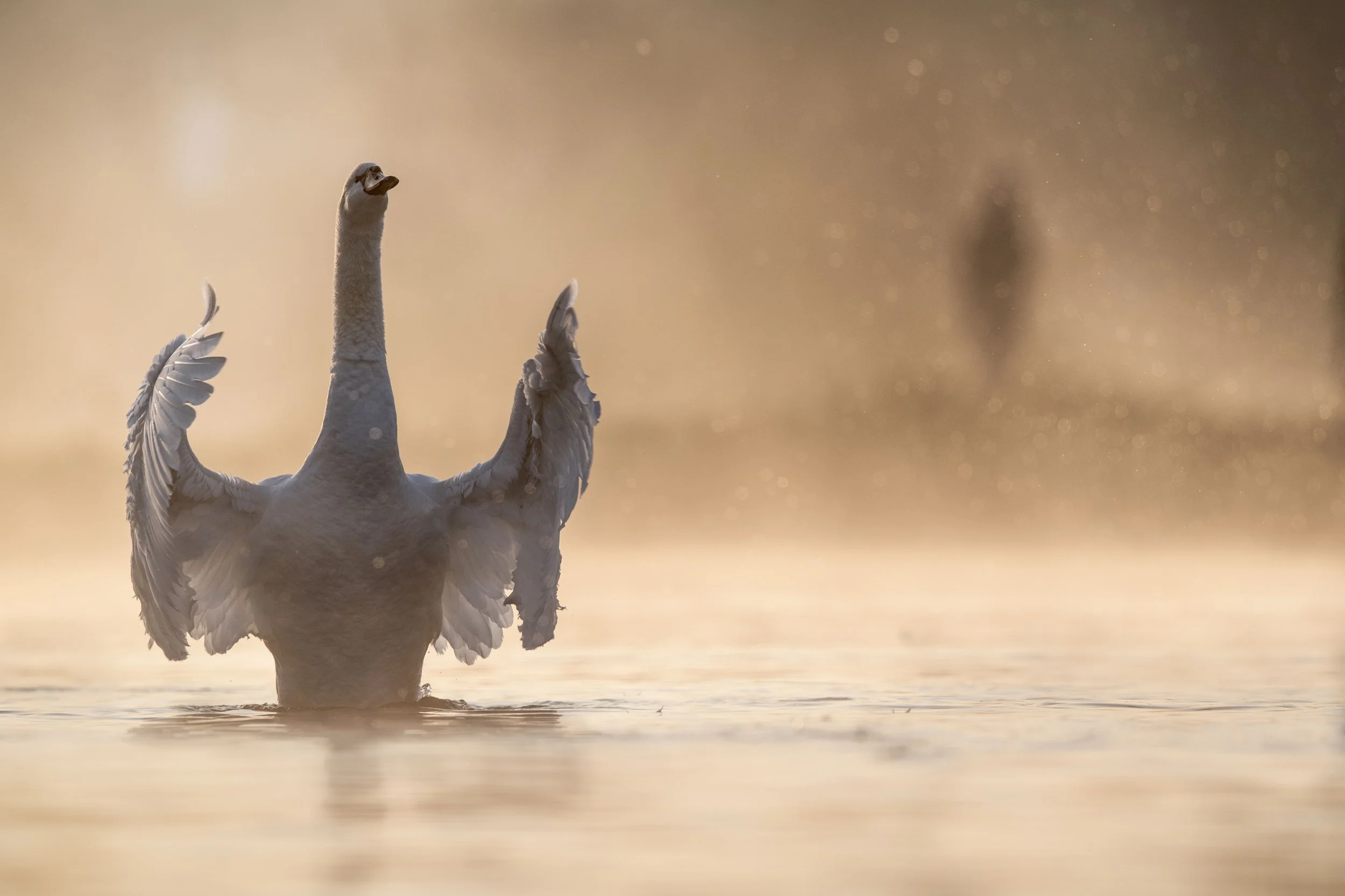
A low perspective is your invitation to see the world through your subject’s eyes.
Caution and Restraint
Photography is always a fine balance between intent and restraint, especially when working close to water. Riverbanks and beds are inherently unstable, softened by silt, reeds, and seasonal flooding. Before committing to a position, carefully assess the ground underfoot to ensure you have a firm, level base, capable of supporting both yourself and your equipment. If in doubt, just re-position so you feel safe and comfortable, with a readily accessible escape route.
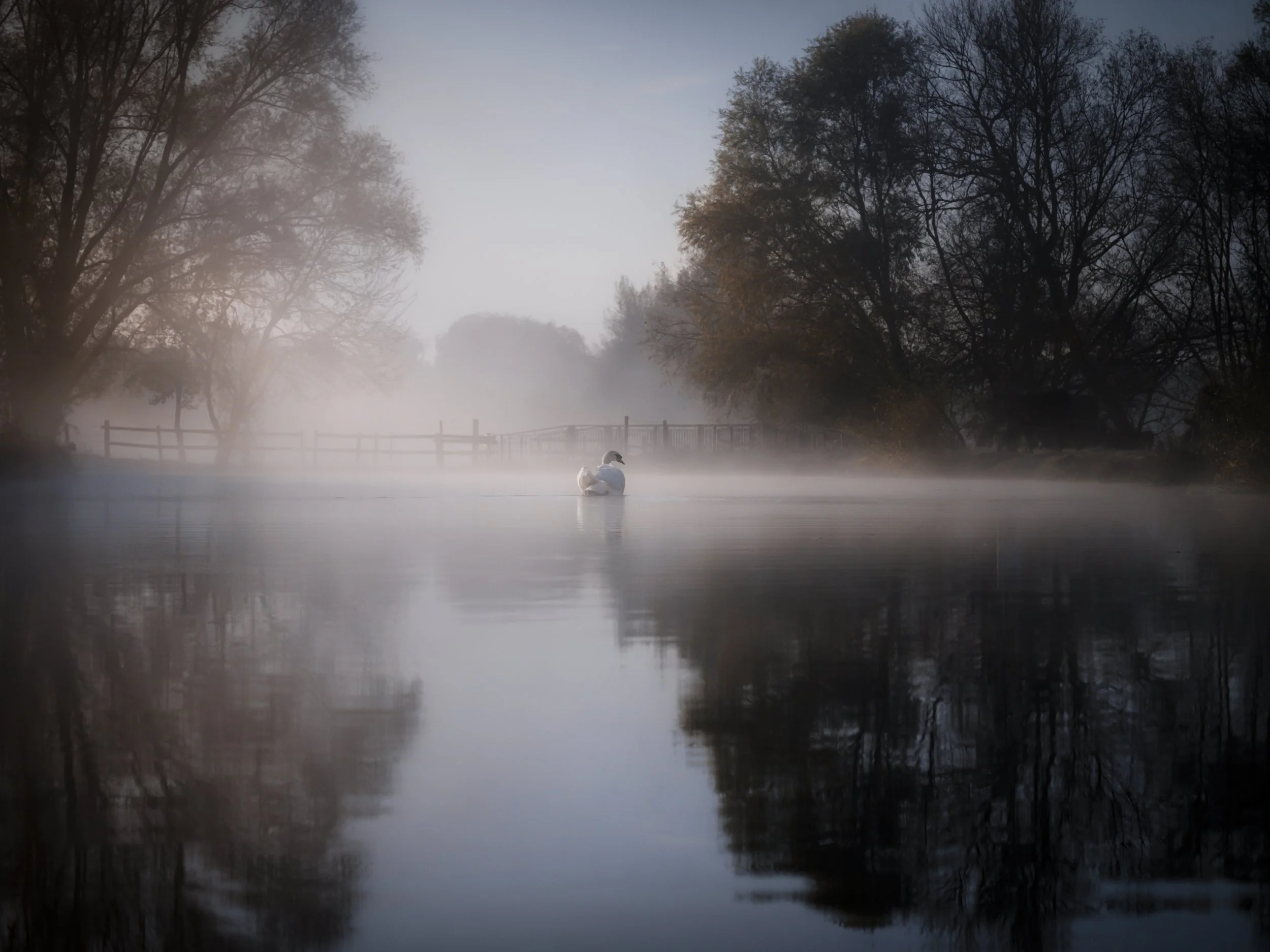
A wider perspective captured during the twilight hour.
A Solid Combination
I typically use a Gitzo 5 series tripod, with a Wimberly WH200 head along the river. It is a a robust and solid platform, especially when paired with a heavy telephoto lens.
A well-weighted tripod is essential when working in water for stability and composure. Extending legs cautiously and avoiding the use of a centre column maintains balance, especially when the camera is positioned low to the water surface.
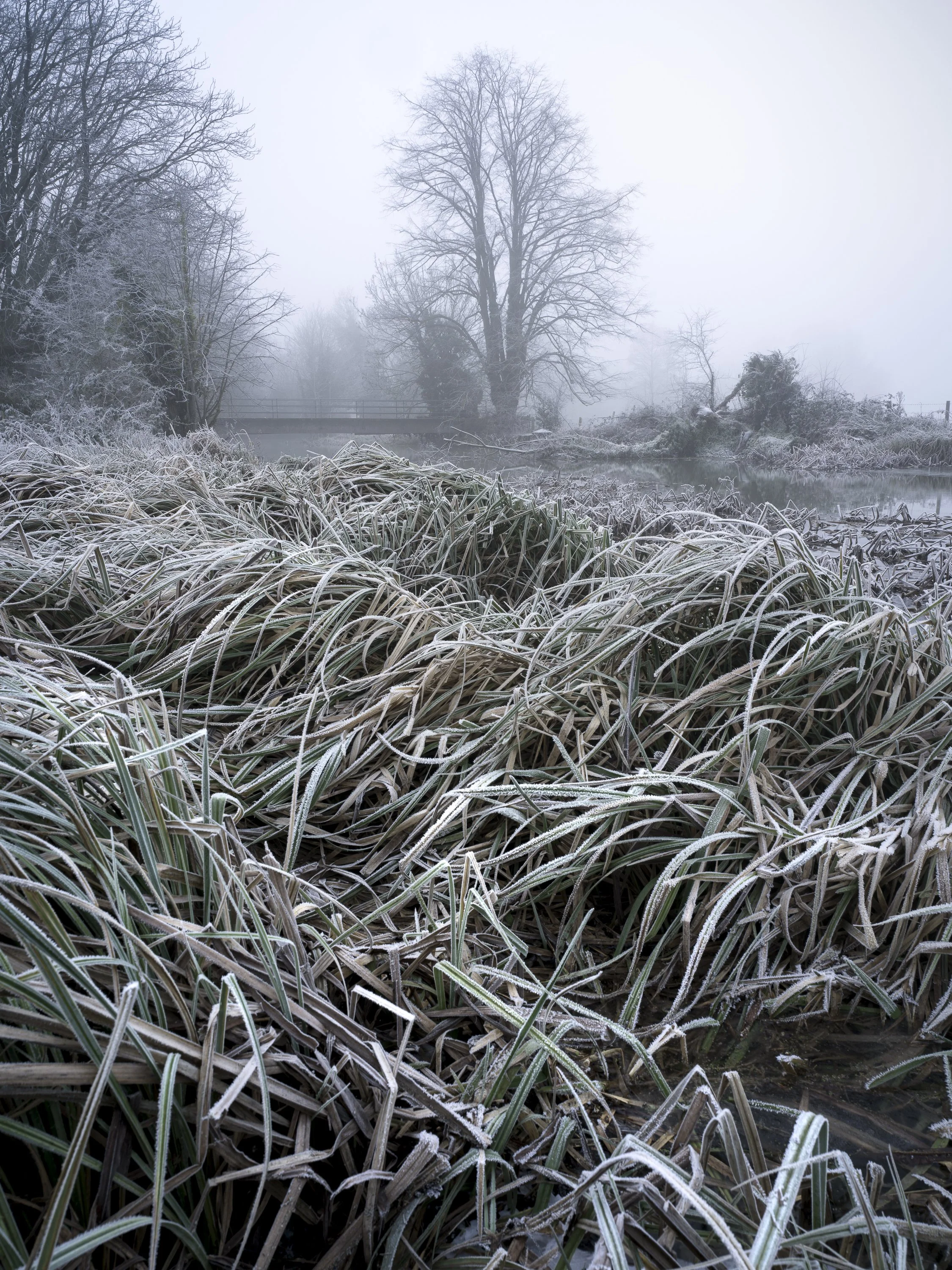
The winter months can often reveal textures and tones which are easily overlooked.
Welfare is Paramount
Swans are generally tolerant of people, but remain highly sensitive to erratic movement and noise. If you see a swan on the water with it’s wings arched over its back moving purposefully towards you, be in no doubt it feels threatened. This is your cue to retreat slowly as “Cobs” in particular will charge a person if their territory is encroached, especially during the nesting season when protecting their young.
In all the years I have worked this location it has only happened once, but it was a lesson well learnt. An adult male swan can exceed 30 lbs in weight, and reach a speed of around 30 mph on a surface charge. When a bird of this weight and speed is charging directly towards you, it is a heart stopping moment you have a tendency never to forget.
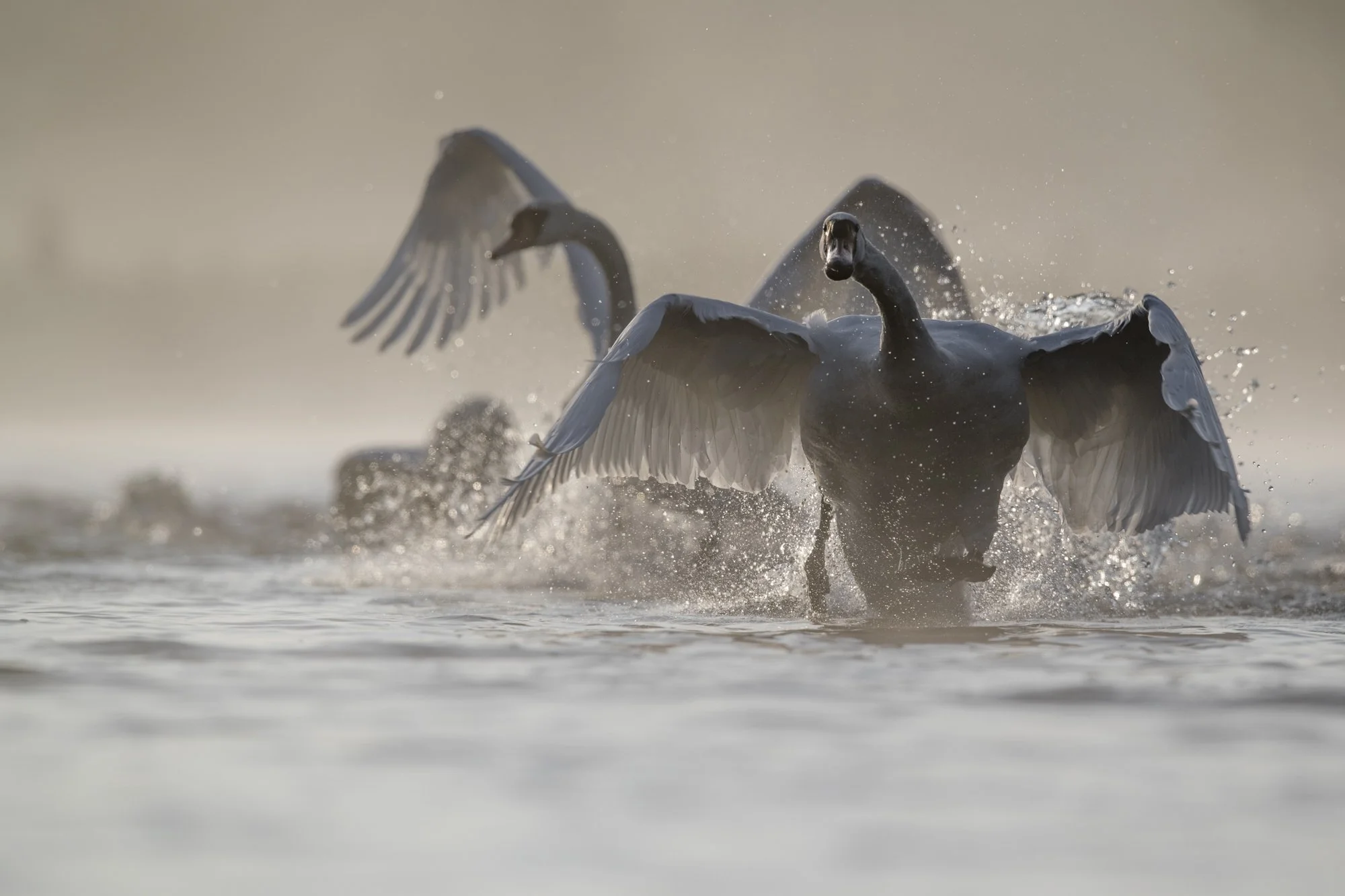
A “Cob” can exceed 30 lbs in weight, and reach a speed of around 30 mph on a surface charge.
Patience And Observation
Slow, deliberate movements, and always maintaining a respectful distance allow the swans to remain settled, without disturbing their natural behaviour. Working thoughtfully in this way fosters patience and careful observation, ensuring your safety and the welfare of your subject. A quiet, measured approach which ultimately leads to both ethical and rewarding images.
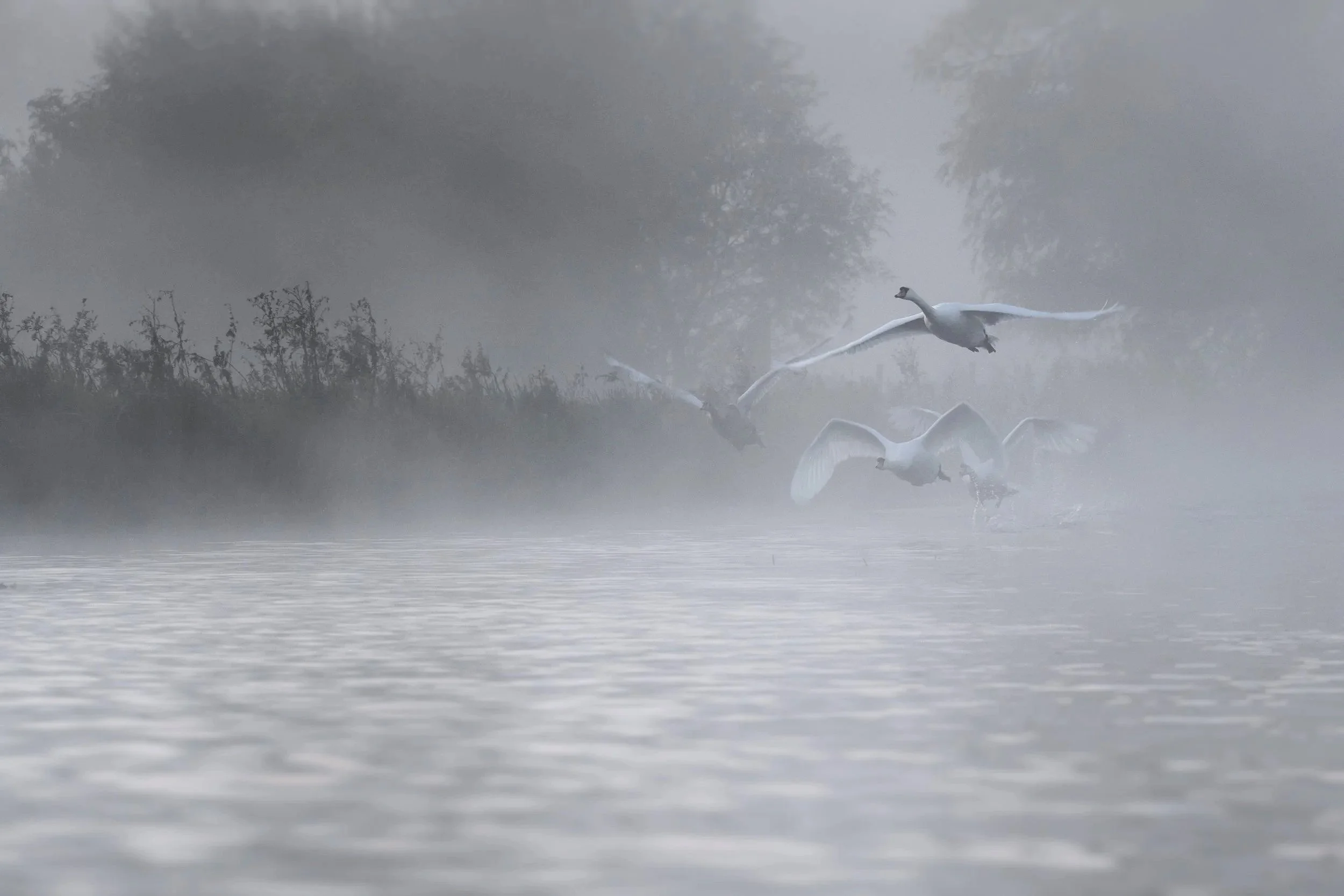
Mute swans take to flight, breaking through the lingering mist.
A Magical Hour
I have always thought the most compelling time of day along the meadow is that quiet hour just before sunrise, especially during the summer months, when the rest of the town has yet to stir.
The twilight hour offers some of the most rewarding moments for photographing swans along the riverbank. It is in this brief window, when the quality of light is just so soft and unhurried. Feathers hold detail, water reflects tone rather than glare, the pace is slow, and the whole scene just assumes an intimate sense of calm.

Working with your camera rig set up in the river can reveal a compelling perspective.
“Light Changes, and that alone alters everything”
This restrained morning light shapes your composition, while subtle adjustments in exposure help preserve the delicate balance between white plumage and the surrounding shadows.
Positioning yourself so the light falls across your subject, rather than behind it, can often reveal tone and depth without overpowering the scene. There are no hard and fast rules but the artist, Claude Monet once remarked, “Light changes, and that alone alters everything.”

Autumnal tones reflect off the water framing this mute swan at sunrise.
Revealing Moments
It is during the twilight hour, when transitions blur and the light hangs low across the margins, the swan’s movement and shape just unfolds with a certain sense of ease. Transitory moments which are “revealed” rather than abruptly “announced”.
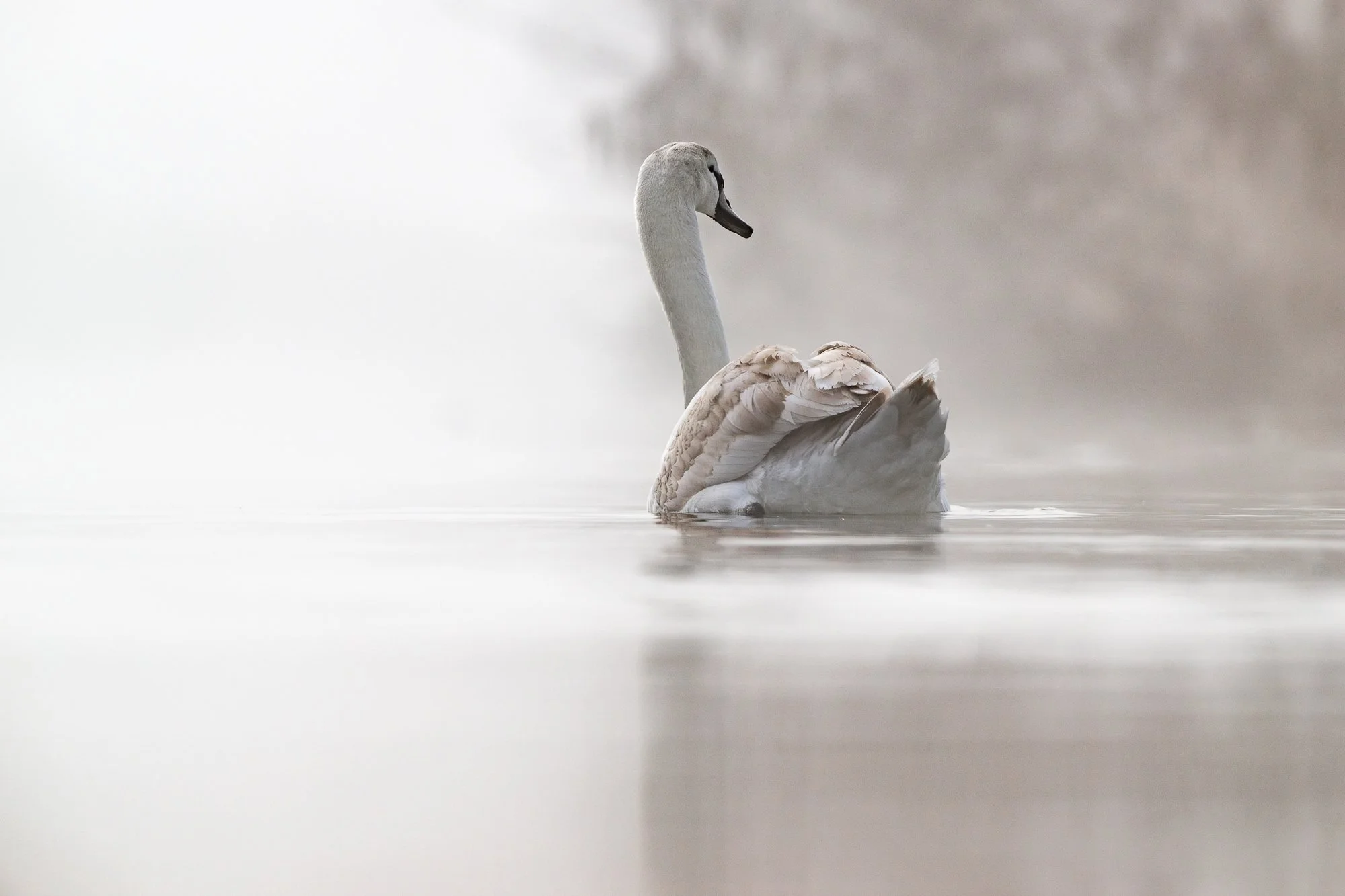
Transitory moments as the mist lingers and a swan slowly glides into frame.
A Meadow of Many Voices
While the swans always offer a reassuring presence, they are nonetheless part of a rich and diverse cast of wildlife which tread the busy stage along the meadow. To the uninitiated much of it remains unseen, but with a little patience and careful observation I am constantly amazed at what you can discover, as nature shifts with the seasons.
Egyptian Geese, with their bold markings and confident behaviour add a sense of dynamism along the banks. Little Grebes, that inhabit the quieter river channels, surface briefly before vanishing again beneath the water. Wagtails introduce flashes of colour in amongst the reeds during the summer months, and Kingfishers announce themselves with a sharp, lingering call before streaking low across the river.

A meadow of many voices as Egyptian geese shepherd their young along the margins.
A Welcome Sight
In recent months otter have been a very welcome sight, and showing particularly well along the quieter stretches of the river. The photographic opportunities are endless.
In a world where wild spaces can often feel distant or fragmented, the meadow is a reassuring reminder nature is never far away, and thriving on the fringes of this busy town.
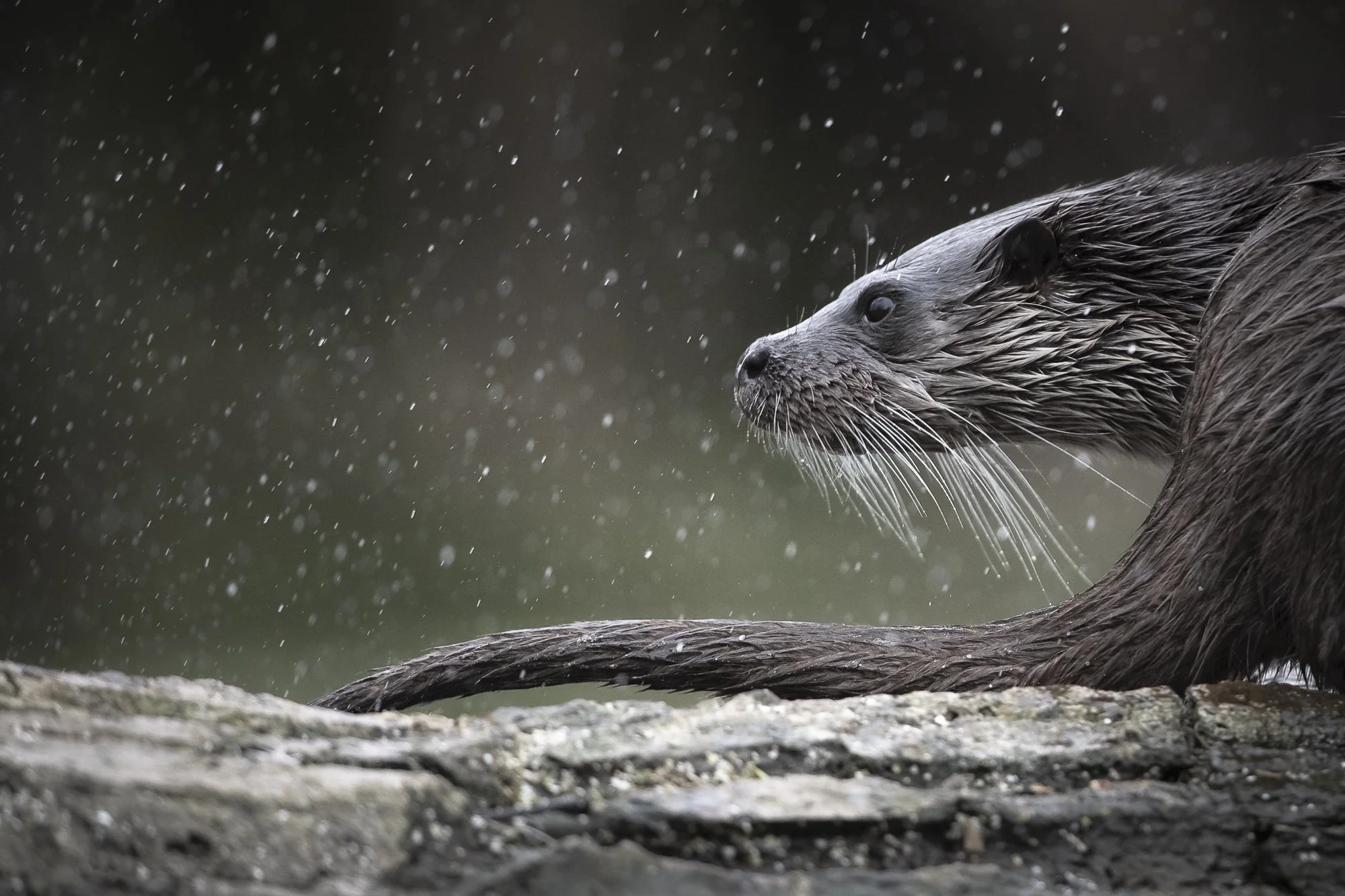
An otter forages along the fallen trees by the river bank.
Keeping it Local
Most of my wildlife photography is focussed close to home in the Suffolk countryside. With good, local access and familiarity, some of the most rewarding projects I have worked on have literally been on my "doorstep".
Sudbury Water Meadow for its part, remains one of my favourite locations to wander along its winding banks and margins. With familiarity, you soon learn to appreciate the rhythm and pace of this habitat as it shifts with the seasons. For the photographer, an appreciation or understanding of this rhythm will often transform random encounters into predictable opportunities.
But the most lasting and enduring impressions of the meadow are rarely the loudest. Photographing this landscape is less about documenting what is seen, and more about what is felt within. It rewards patience and careful observation, in a place where moments tend to reveal stories for those prepared to linger.

Patience and careful observation is often rewarded for those prepared to linger.
The Beat of The Meadow
The mute swans, with their long established territories and complex patterns of behaviours, are central to this story. Quiet, unassuming, yet always constant, they remain a visible reminder to the continuity and understated beauty which defines this precious space.
When life often feels hurried and uncertain, it is this enduring rhythm, this sense of consistency and ease, which offers something so deeply profound when walking this unassuming landscape at first light.
Standing here today, in a place where Gainsborough once sought inspiration all those centuries ago, it is easy to understand why.
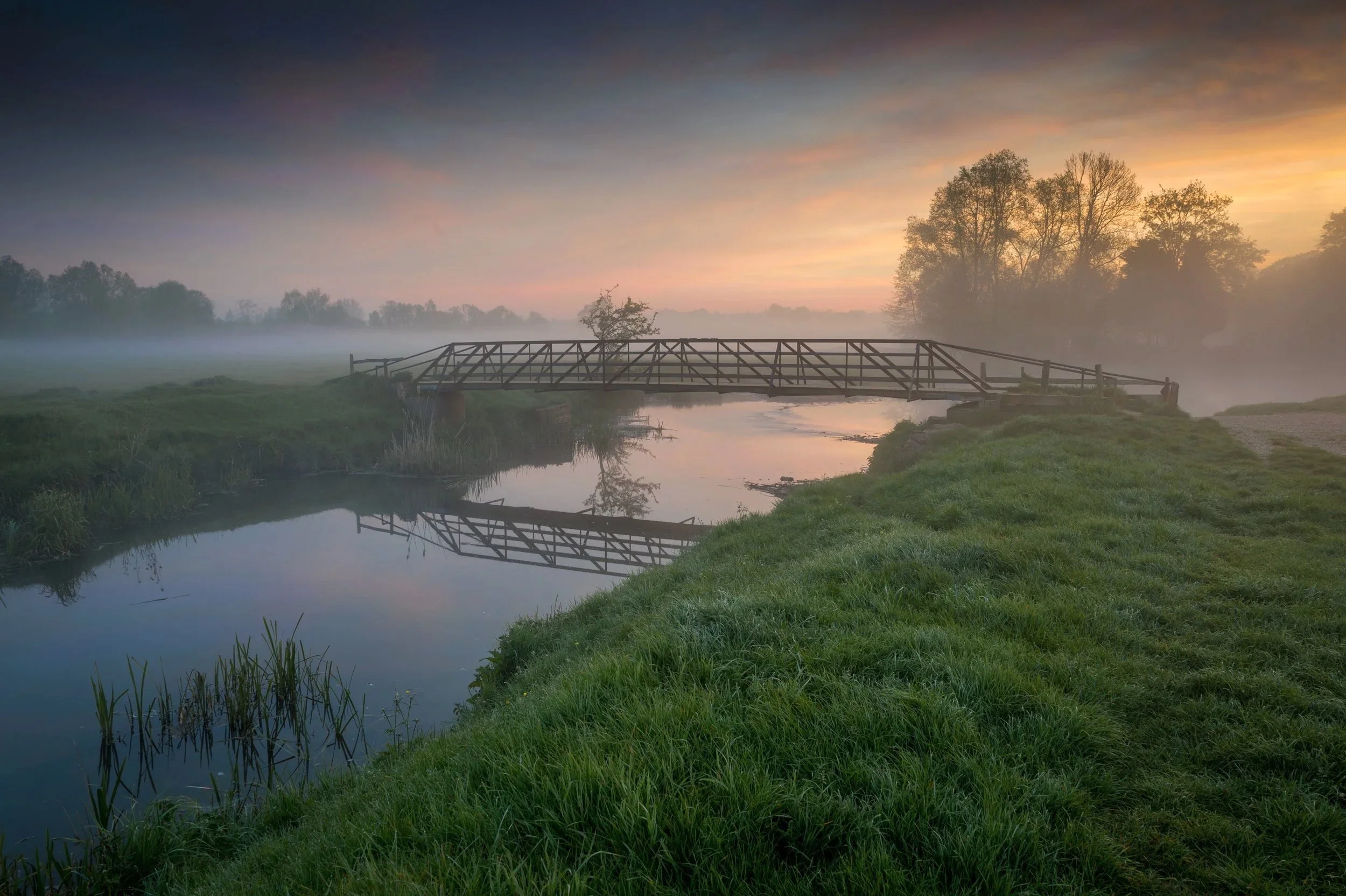
The stillness of the twilight hour before the town has yet to stir.
Find Out More
You can explore more of my wildlife photography and field notes here on the blog, or follow along on my social media for regular updates from the Suffolk fields. The links are available below.